Bulk water removal
Pumps or professional extractors are selected for the depth, surface and water condition.
Prompt professional extraction removes standing water from floors, carpets and lower levels, limits further migration and gives structural drying a stronger start.
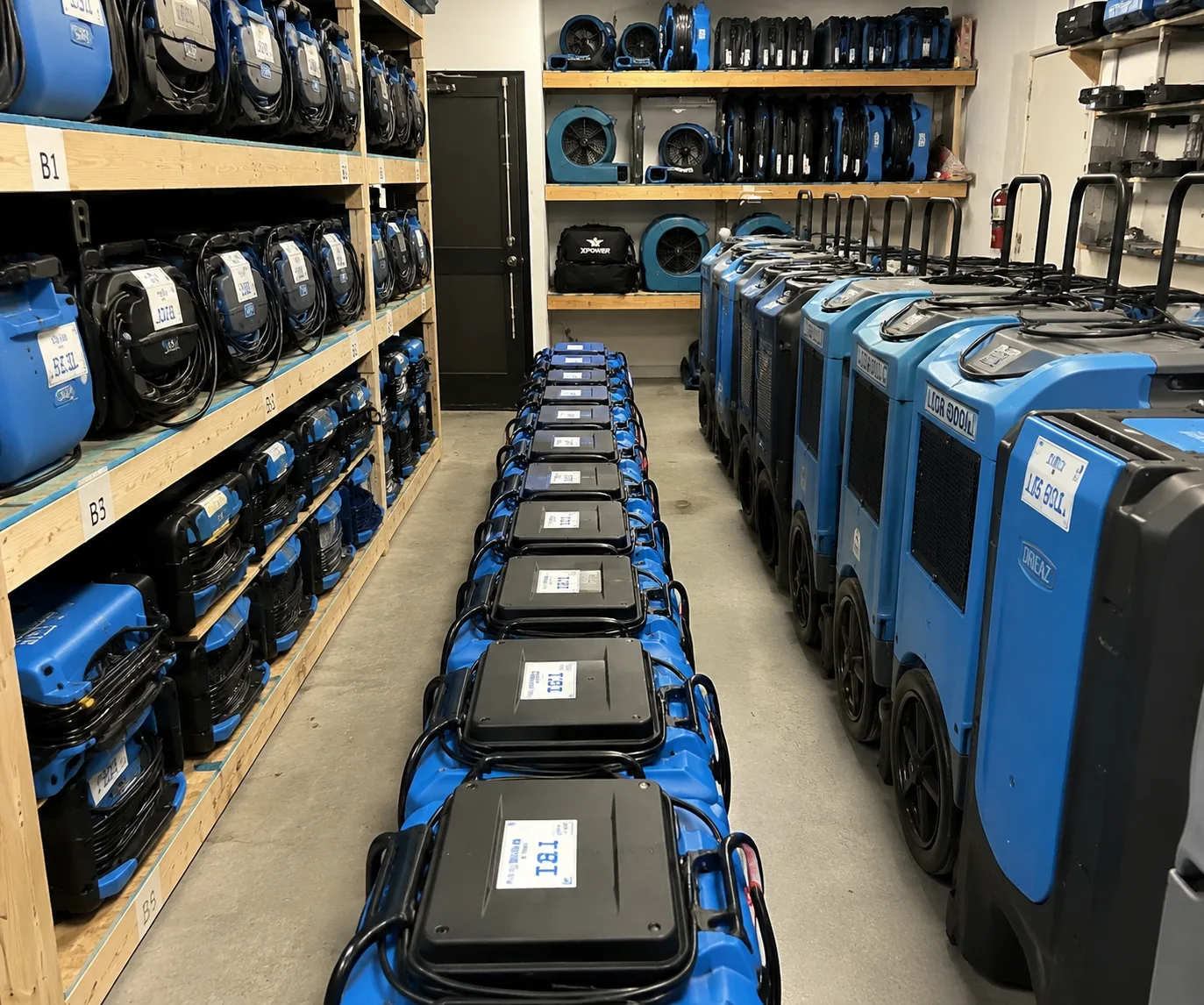
Removing liquid water is generally more efficient than relying on evaporation alone. The extraction method depends on water depth, access, floor covering, contamination and whether water is trapped beneath a finished surface.
After extraction, moisture measurements identify what is still wet. Air movement and dehumidification are then balanced for the materials and room conditions rather than simply placing equipment by the visible puddle.
We provide water extraction for West Vancouver houses, finished basements, strata units, common areas and commercial spaces. The work is documented from the visible water conditions through the transition to structural drying.
Water settles into low points, carpet pads, flooring seams and hidden edges. We select extraction tools for the surface and access conditions, then check nearby materials for retained moisture. The goal is not simply a floor that looks dry. It is to remove accessible liquid water efficiently so the remaining moisture can be managed.
Extraction removes liquid water. Drying removes moisture held in materials and the air. Both are needed for a complete response. After extraction, we map affected materials and recommend air movement, dehumidification or selective access based on the building assembly.
Our inspection connects these considerations to the actual source, materials and conditions at your West Vancouver property.
Pumps or professional extractors are selected for the depth, surface and water condition.
Flooring edges, underlay, wall bases and nearby rooms are checked for concealed migration.
Equipment placement follows the post-extraction moisture map and is adjusted through monitoring.
The water source, exposure time and material condition determine whether textile flooring can be retained.
Seams, perimeters and transitions are checked for water beneath laminate, engineered wood or other finishes.
Ceilings, wall cavities and lower rooms are inspected when water has travelled vertically through the building.
We adapt equipment and material decisions to the source, construction and site conditions.
We check the water source, electricity concerns and contamination conditions.
Portable equipment or tools suited to the surface are used where they will be most effective.
We work from the most affected zones toward edges and connected spaces.
Remaining moisture is documented and the plan for the next drying stage is set.
These general answers help you plan the first steps. Site conditions and insurance policies vary.
Commercial extraction tools remove water efficiently across different surfaces and help reduce the moisture load before dehumidification begins.
Usually not. Floors, walls and other materials may remain wet after standing water is gone, so moisture checks and structural drying are typically needed.
Yes, when the carpet is appropriate to retain. The water source, exposure time, carpet condition and underlay all affect that decision.
As soon as the source is controlled and the area can be entered safely. Prompt action can reduce water migration and secondary damage.
We inspect flooring edges, seams and transitions to determine whether water has moved underneath. The extraction or access method depends on the flooring, underlay, subfloor and contamination conditions.
Yes. We provide water extraction for homes, strata units, common areas, offices and other commercial spaces in West Vancouver, with documentation for the appropriate property contacts.
Speak with a West Vancouver water damage team, get clear next steps and arrange a free inspection.