Water category and exposure time
The source and the time materials stayed wet influence cleaning, removal and safety decisions.
From a small ceiling stain to water across several rooms, we locate the source, map the moisture and build a practical drying plan for your property.
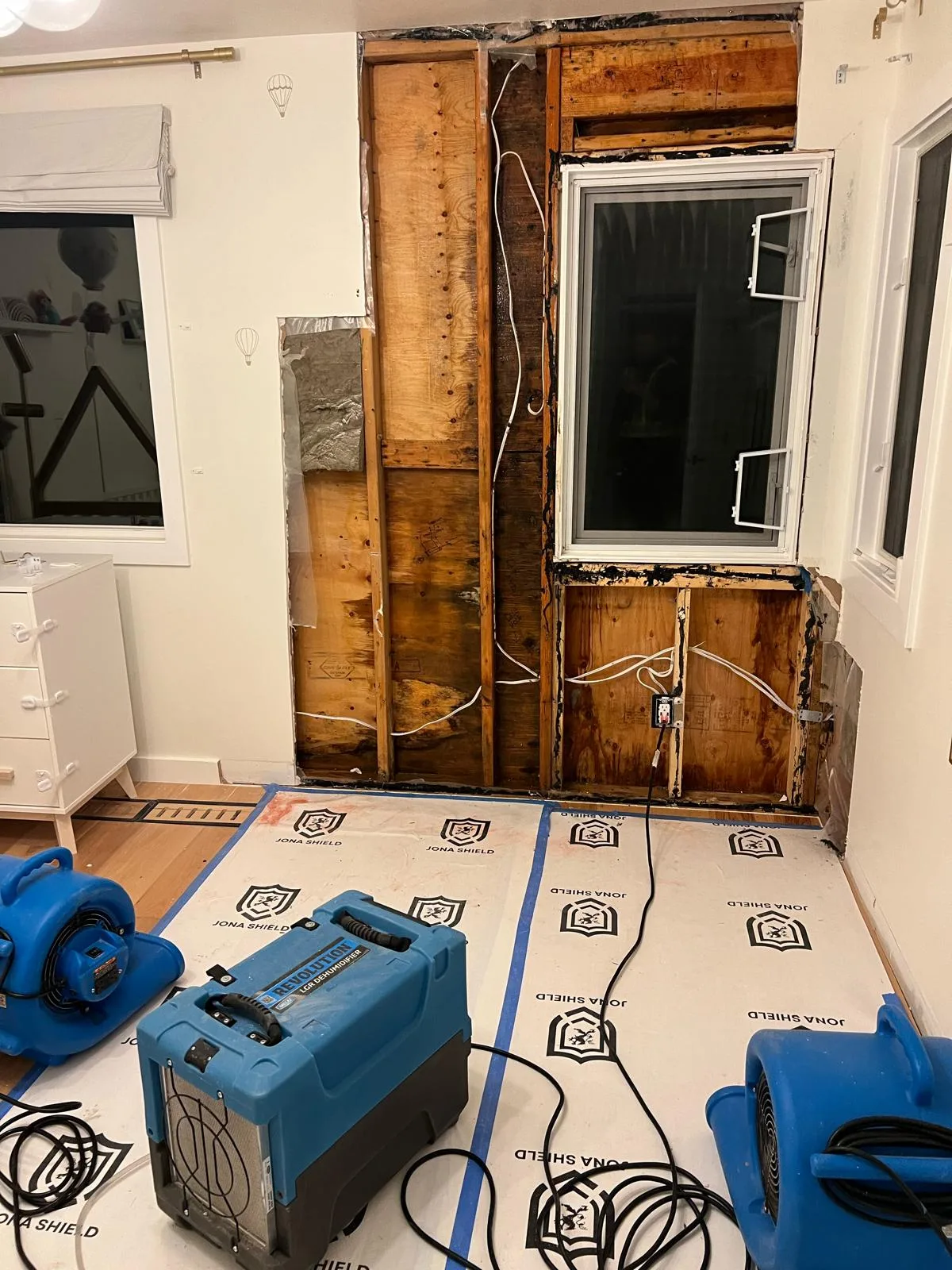
A visible mark is often only the edge of the affected area. Water can wick into drywall, move under flooring and collect inside insulated cavities. We check adjoining rooms and lower levels so the restoration scope reflects the actual moisture pattern.
In West Vancouver homes, multi-level layouts, finished basements and complex wall assemblies can make that investigation especially important. Drying targets, equipment placement and repair recommendations are documented as the project progresses.
Water can move behind baseboards, through wall cavities and under finished flooring long after the visible puddle is gone. Our restoration team checks the full affected area, removes standing water, dries materials under controlled conditions and identifies what can be saved. You receive clear updates and a documented scope instead of guesswork.
A successful water damage project is measured, not assumed. We compare affected and unaffected materials, monitor progress and adjust drying equipment when readings show it is needed. That approach helps limit unnecessary demolition while reducing the risk of trapped moisture.
Our inspection connects these considerations to the actual source, materials and conditions at your West Vancouver property.
The source and the time materials stayed wet influence cleaning, removal and safety decisions.
Drywall, insulation, hardwood, carpet and cabinetry absorb and release moisture differently.
Recorded moisture readings show whether the assembly is responding before equipment is removed.
We adapt equipment and material decisions to the source, construction and site conditions.
We identify the likely source, check safety concerns and map the affected materials.
Standing water is removed and vulnerable contents are moved or protected.
Air movers and dehumidifiers are placed for the building assembly and monitored with moisture instruments.
Affected surfaces are cleaned, damaged materials are addressed and repair needs are clearly explained.
These general answers help you plan the first steps. Site conditions and insurance policies vary.
We use moisture meters and comparison readings from similar unaffected materials. Equipment is removed only after the agreed drying targets are reached.
Sometimes. The water source, length of exposure, material condition and contamination category all matter. We assess materials before recommending removal.
We can define the repair scope and coordinate the restoration work needed to return the affected area to a usable condition.
Yes. We can provide moisture readings, photographs and a clear record of the mitigation work to support your claim conversation.
Speak with a West Vancouver water damage team, get clear next steps and arrange a free inspection.